
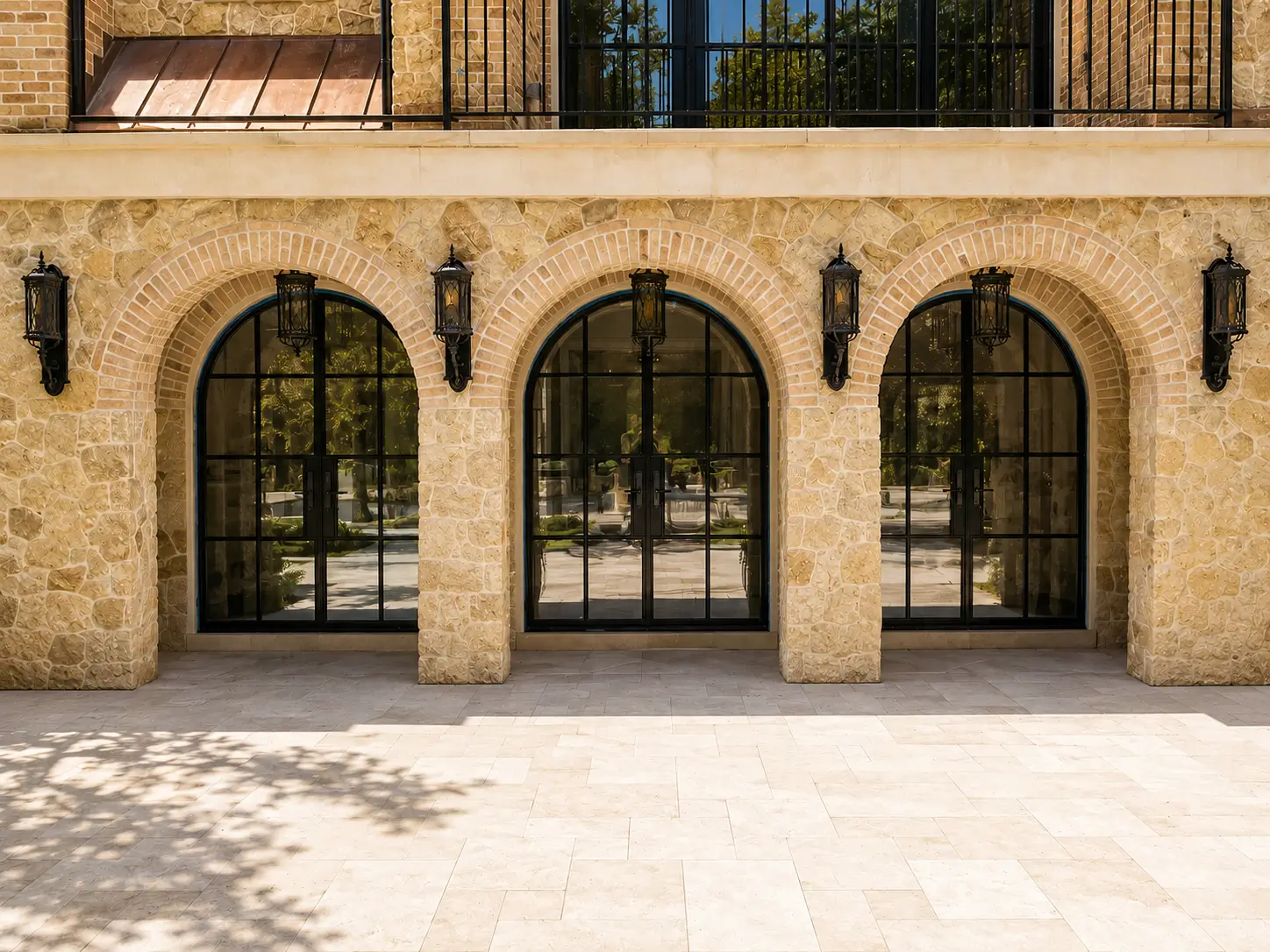
Thermally broken steel doors reduce heat transfer through the steel frame.
They are especially useful for patio openings exposed to hot summers or cold winters.
Thermal break technology can improve comfort and energy efficiency.
It can also help reduce condensation on interior steel surfaces in cold weather.
Custom steel patio doors can combine slim profiles, expansive glass, and improved thermal performance.
Patio doors play an important role in connecting indoor living spaces with the outdoors. They often feature large expanses of glass, making them a major architectural feature as well as part of the home's exterior envelope.
For homeowners who want the slim profiles and refined appearance of steel without overlooking energy performance, thermally broken steel doors can be an excellent solution.
Steel is exceptionally strong, which makes it possible to create narrow frames around large glass panels. That strength is one reason steel doors and windows are so popular in luxury residential architecture.
However, steel also conducts temperature efficiently. A thermal break places a low-conductivity barrier between the interior and exterior portions of the steel frame. This interrupts the direct path for heat or cold to move through the metal. The result is a steel door that maintains the clean, narrow appearance homeowners want while improving thermal performance.
Large patio doors can influence how comfortable the surrounding room feels. During winter, exterior temperatures can make a standard steel frame very cold. During summer, heat can move through the frame toward the interior.
Thermal break steel doors help reduce this temperature transfer, making them especially valuable for patios connected to living rooms, kitchens, dining areas, and primary suites.
Because patio doors separate conditioned interior space from the outdoors, reducing heat transfer can contribute to better overall energy performance. A thermally broken frame helps prevent the steel itself from becoming a direct pathway between exterior and interior temperatures. This is particularly important for larger openings, where substantial areas of steel and glass are exposed to outdoor conditions.
Thermal break technology can also help reduce condensation in colder climates. When warm indoor air comes into contact with a very cold metal surface, moisture can form on the frame. By limiting how quickly exterior cold moves through the steel, a thermally broken system can help keep the interior surface warmer. That can make a noticeable difference during freezing winter conditions.
One of the biggest advantages of steel is its ability to frame large areas of glass with relatively narrow profiles. Custom sliding steel doors, hinged patio doors, and custom pivot doors can all create dramatic connections between indoor and outdoor spaces.
Thermally broken construction allows homeowners to achieve that luxury steel-and-glass appearance while improving performance in demanding climates.
Every patio opening is different, which is why custom fabrication matters. We build custom steel doors and windows designed around the dimensions, architecture, glass, hardware, finish, and configuration of each project.
Whether a home calls for expansive sliding steel doors, blackened steel doors, or a complete package of luxury doors and windows, thermally broken construction can provide a stronger combination of beauty, comfort, durability, and energy efficiency for exterior patio openings. Contact us today to talk about your project!
It means a low-conductivity material separates portions of the interior and exterior steel frame, reducing heat and cold transfer through the metal.
They are especially valuable in climates with very hot summers, cold winters, or large seasonal temperature changes.
They can help reduce condensation by limiting how cold the interior steel surface becomes during winter.
Yes. Custom sliding steel doors can incorporate thermal break technology for exterior patio applications.
No. They can also help reduce heat transfer in hot climates, making them useful in both hot and cold regions.